
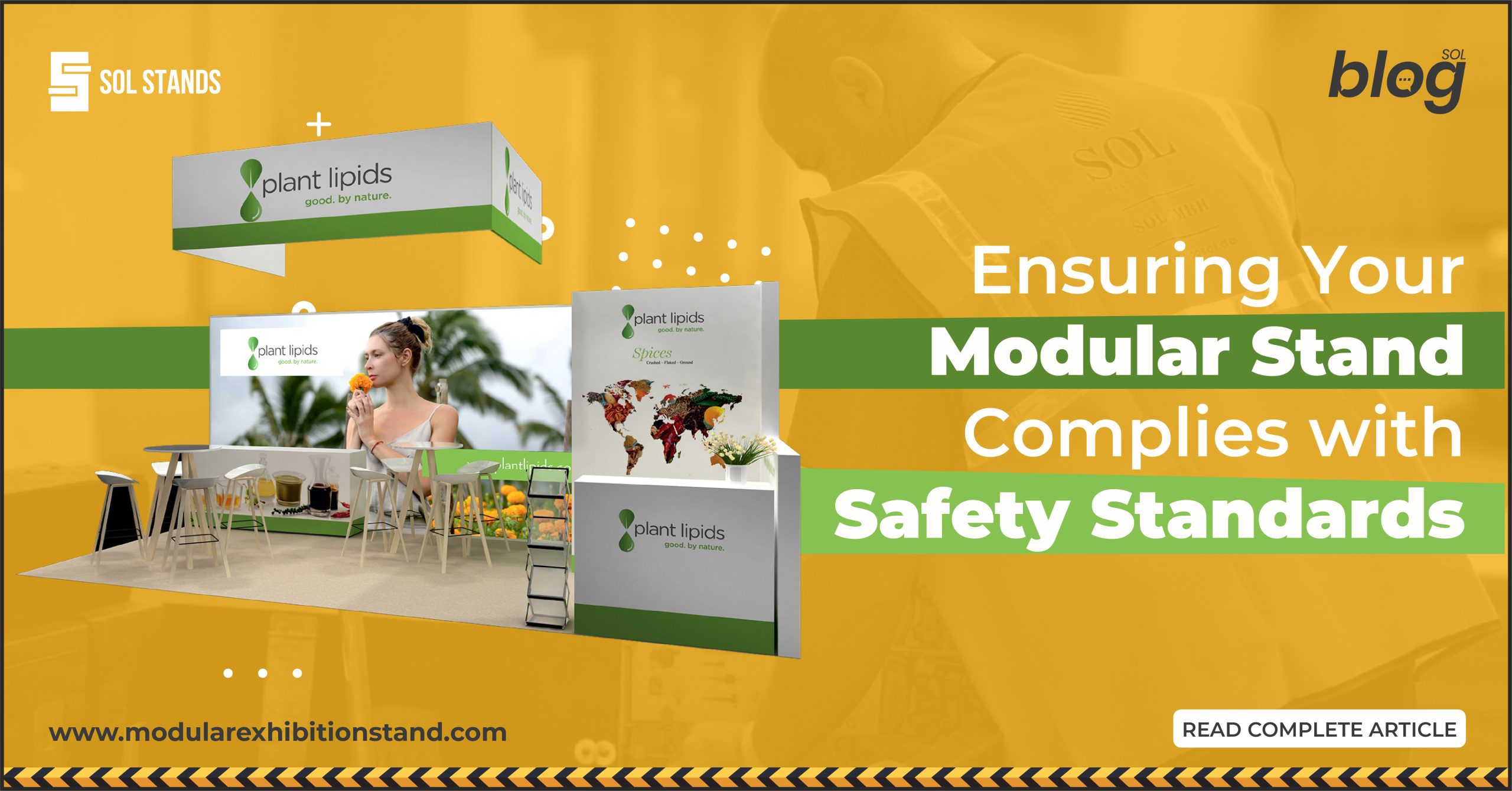
Modular stands and booths are used as a general method to design and build specialized trade show stands and spaces. Though similar to any structure in which people will be operating, it is necessary to guarantee that modular stands are compliant with safety features and policies. Lack of compliance with safety concerns can result in accidents, legal cases against you or your company, and negative effects on the image of your brand.
So, through careful premeditation and integrating safety as a fundamental aspect of the modular stand design, you are in a position to trust the design and create an environment that safeguards both the attendees and exhibitors.
Entry and Exit Points
A modular stand must be designed in such a manner that it can be entered and exited without a whole lot of hassle in case of an emergency. When designing your floor plan, ensure:
- Proper aisle and movement space around the extended part of the stand.
- It was also possible to have multiple entry and exit points that meshed with the layout of a stand.
- They should also be able to clearly see the evacuation routes laid out on the floor or on the walls of the room.
- The design eliminates blind alleys – or corridors that are as narrow as an alley.
Structural Integrity
The following aspects can be distinguished regarding the safety of the components: The physical integrity of the modular stand components is the basis of safety. All elements should be designed and constructed to be sturdy and secure:
- Select construction materials for the show pieces that will not easily wear out as the showpieces are assembled and disassembled for the purpose of the show.
- To enhance the stability of the stand, bracing, reinforcements, and stabilizing features must be integrated into the stand design.
- Choose those parts of the modular system that can be implemented with locked connections and with no open spaces.
- Make sure that any beams or columns constructed according to specific needs also conform to standards of use for loading.
When ordering components for the modular stand, ensure that companies that produce these components adhere to the design and engineering process and test the stand’s stability and durability. Request to view test reports for wind shear, vertical loads, and earthquake test results.
Signage & Lighting
Proper signage and lighting keep attendees informed, aware and safe while navigating your modular stand:
- It is recommended that various signs be installed, such as emergency exits, first aid kit locations, fire extinguishers, etc.
- Safety sign formats, symbols, and colors should be consistent across various places and settings.
- Light up corridors and differences in height, such as staircases or inclines.
- Make sure that vision is not hindered by low lighting around the stand to make it attractive to the visitors.
Rather than implementing these safety measures into your modular stand as an add-on or an afterthought, it is better to combine many of them at once: this way, attendees are unlikely even to notice the dangers and are kept occupied with your brand message.
Fire Protection Standards
Fire protection is one of the key issues that should be addressed in modular stands because materials that can be used in them are combustible, and fires are likely to develop rapidly in closed exhibit areas of event spaces. Ensure your stand adheres to the full fire code for trade show structures, including:
- The choice of materials that do not burn easily and those that do not release sufficient heat to cause burning.
- Using chemicals to make fabrics used in decorating and other accessories flame-resistant.
- The following repair and installation recommendations may be useful: Putting up smoke detectors and fire extinguishers.
- Providing sufficient fresh air or proper window openings.
- It is necessary to have fire exits and reflective signs on the exit routes.
- Abolishing all the causes that can cause a spark, such as electrical failures.
Another important factor is that it is necessary to make sure what kind of requirements are needed for the specific event place. Some facilities have policies against specific materials used in modular construction or multi-tiered stand designs that are not equipped with suppression apparatuses.
Electrical Safety Standards
Higher use of electrical components for lighting, AV displays, product demonstrations, and other applications is commonly observed in modular stands. Faulty electrical work can result in fire outbreaks, electric shocks and destruction of property, among others. Work with experienced trade show electricians to:
- Draw an electrical plan showing spots of connection, wires, and screws, if any.
- Measure the necessary electrical loads and request that the venue secure the appropriate power supply.
- It means that all the cables and connections shall be original and untamed ones that have been certified for use.
- Provide necessary outlets in enough numbers so that the cables prove to be a nuisance, tripping people.
- To avoid the visibility of cables, you can mount them on tracks along the walls or under floorings.
- Make sure all the electrical components have their ground well connected.
Although doing so does not look inventive and is not the most exciting aspect of booth design, it makes the structure work efficiently.
Safe Working Practices
Safely setting up, using and taking down modular stands also relies heavily on your team following safe working practices:
- This means that there is a need to ensure all the stand builders receive adequate safety training so that they understand important safety measures.
- Ensure adherence to protective measures that include the use of helmets, goggles and gloves, especially during construction.
- Designate limited lift zones for overhead components.
- Make sure the workers are allowed ample time to rest to help reduce the incidents that result from fatigue among the working crew.
- Utilize means like the forklifts and genie lifts sparingly and when necessary, and also with adequate precaution.
- Develop a systematic plan for when to put up the displays so as to minimize the risk of lives during move-in/move-out.
Although the parts are more straightforward to integrate, incorporating them into the context of handling other gear and materials with large-scale construction equipment and moving around a crowded site may be challenging and potentially dangerous. Ensuring that everyone on your team follows these discipline safety measures helps to keep your team safe.
Conclusion
When designing stands, you think about compliance with rules and regulations from the initial design of modular stands for compliance with the safety standard for exhibitors; it means that you free them from worrying about potential dangers and instead engage them with the attendees. Business owners report that safety-first-stand construction may initially mean additional costs, but these bring invaluable returns as they offer peace of mind.