
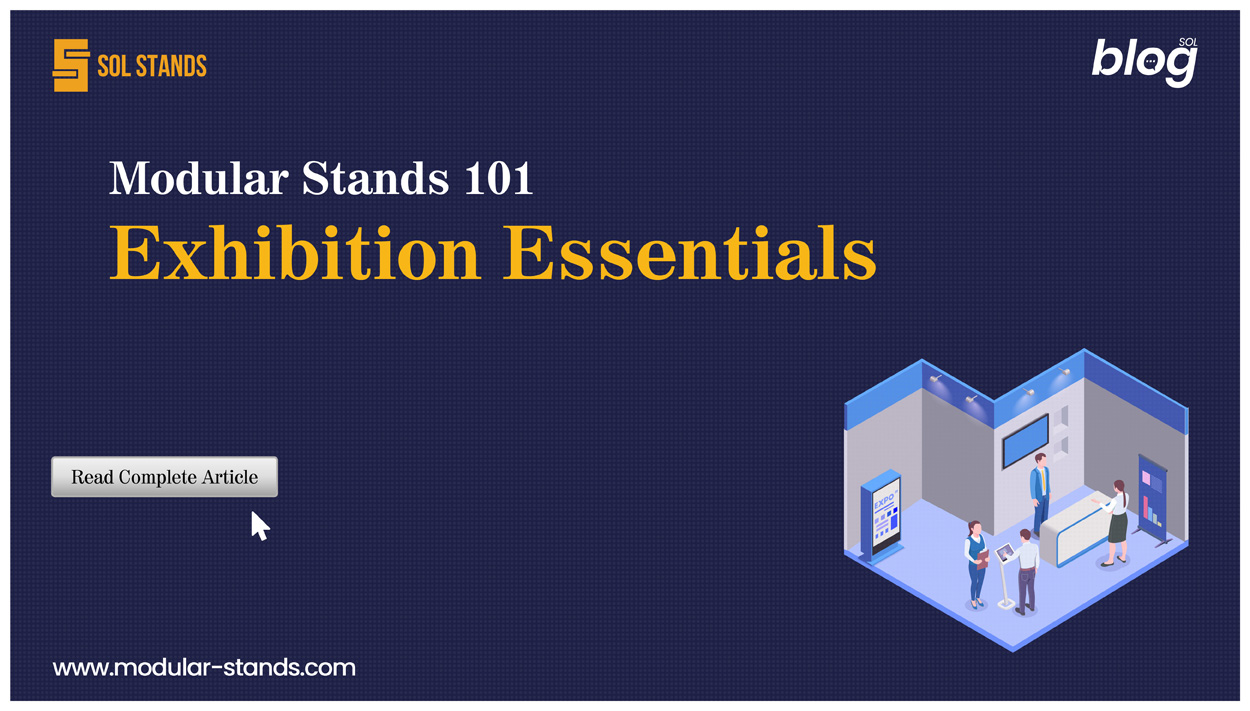
Since an increasingly complex display of products feature in most exhibitions and trade shows, modular stands have emerged as a critical tool. They are flexible and portable, easily adaptable to any design specifications, and affordable compared to other options. In this article, the reader will be introduced to the basic characteristics of modular stands, and the factors one should take into account while choosing the stand and applying it at exhibitions.
What are Modular Stands?
Modular stands are unique, exhibiting structures made from pre-fabricated parts that can be configured into various structures by connecting in many ways. These are made of aluminum or steel frame and panel assembly; they are easily interlocked with locking devices to form walls, counters, shelves, interior fixtures, towers etc.
Modular components vary from frames and panels to headers, shelves, counters, interior fixtures, lighting, flooring, and graphics. These can be combined in such a manner to complement the stand design of their preference.
Advantages of utilizing modular standards
-
Flexibility: There are opportunities for the stands to be designed in a way that is entirely different from other stands and that helps align with the brand image of the exhibitor.
-
Amalgamation nature: Once the stand’s parts are built, they can be easily rearranged for different configurations, which is cost-effective for companies that take part in many events.
-
Easy to erect/demount: Modular stands can be erected or demounted within hours, and this may take the use of simple tools; hence, a small workforce is needed.
-
Mobility: The large structures come in individual sections that can be neatly packed in crates and easily transported to different events. This also decreases the costs of shipping a product from one region to another.
-
Accessibility: The majority of modular stand systems offer a wide range of standard and enhanced solutions for booth accessibility improvements.
Types of Modular Stands
• Hard-Wall Stands – Comprising framed structures and panels creating enclosed stand spaces, it is the most prevalent stand type.
• Hybrid Stands – These are stands that have hard-wall modular components as well as fabric structures like canopies, tents, and tension fabric.
• Pop-up Frames – These are specially designed for ease of use, lightweight and portability as they only require to be set up and taken down.
• Custom Modular Stands – Stand designs that are created from modular components depending on the actual requirements of the exhibitor.
Modular Stand Materials
-
Aluminum: Aluminum is lightweight yet very durable; it results in fashionable designs and is easy to move.
-
Steel: This is one of the toughest of the four types of metal and, as such, more durable than Aluminium although we have this in varying thickness.
-
Wood: It has been used mainly in shelves and countertops due to its versatility in these areas. It provides warmth and has a natural look but is more inhabitable in terms of maintenance.
-
Plastics and Composites: This type of flooring infill panels can be made at low cost using Acrylics, PVC boards, or recycled plastics.
-
Fabric & Textiles: Employed in canopies, tension fabric graphics, hybrids, & printable media.
Design Considerations
Some key considerations when designing modular stands:
-
Space Objectives – Specify those objectives that are concerned with image, visibility, movement enclaves, demonstrations, meetings, etc.
-
Brand translation – It is important to incorporate colors, graphics, materials, shapes, and dimensions that are greatly associated with the brand.
-
Space Planning – Plan out how you want the space to look and how it will be laid out for products, workstations, seating, traffic patterns, and storage.
-
Height variations – It includes incorporating tall or height-modifiable features to stand out from the exhibition surface.
-
Proper Lighting – For lighting, mood, task, and accent lighting enhance the friendly and active environment of the stand.
-
Accessorizing – Think of cases, screens, chairs, graphics, and freebies to give total brand identity to the area.
Best Practices of Using Modular Stands
The exhibition experience would be quite pleasant if you understand and apply the best practices of using modular stands, as elaborated below:
Set-Up
– Discuss and coordinate the floor plan and stand schematic to lay down
– Look for signs of wear on the parts and hardware; any component that show signs of wear should be replaced.
– Tidy up your work surface and ensure that it is free from interference.
Branding
– They should both incorporate signs, graphics, and color schemes as a way of having the same brand image.
– They must be placed where they stand out or can easily be noticed.
– If reusing the stand, refresh dated branding elements. As an exhibitor, it is essential for making high-quality connections.
Functionality
– Verify that the specific lighting, electricity, and Wi-Fi connection are suitable
– Arrange the related product displays, counters, shelves, and seating in a reasonable layout
– Organize the booth layout in a manner that allows attendees to locate and access the booths easily.
Engagement
– Ensure the booth is always clean, brightly lit, and manned at all times.
– Educate the staff on what is offered, what they need to say as well as how they should address potential challenges.
– This can be done in the form of discounts or any other form of incentives in order to encourage people to come to your stand.
Teardown
– Disconnection of some elements of the booth, lights, and electronics should begin.
– Retain hardware in some kind of order and appropriately tagged to facilitate their re-use later.
– Look for damages: if a product is beyond repair, it should be disposed of.
Maintenance
– Site repairs: Re-apply paint in areas with scratches or flakes; replace the panel that are damaged.
– On the hardware front, ensure that all the necessary pieces are in place and that any missing or faulty pieces are replaced.
– Make sure components are clean and the cleaning process should be done without exposure to moisture and heat.
In general, modular stands can be used for many years if they are taken proper care of. Check requirements and modify the constituents to sustain branding and performance at every utilization.
The Final Note
Modular setups that are personalized to the changing branding and demonstration requirements are also beneficial in ensuring that the exhibitors pass on their trade show messages. This is due to the inherent flexibility and possibilities for personalization that modular exhibition stands afford their users, allowing them to consistently refine their presence at exhibitions.